

Beekeeping as a contribution to food security
IN 2011, on the opening day of the 22nd World Scout Jamboree in Sweden, I made a commitment. Unless actions are taken now, the dramatic decline in numbers of insect pollinators globally will eventually contribute to increased food insecurity and the possibility of conflicts in the future.
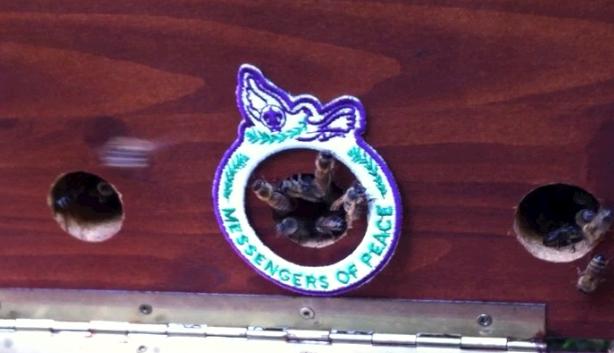
My Messengers of Peace project is exploring low-cost, low-impact ways to keep healthy colonies of honey bees using a Kenyan Top Bar Hive. This year, I have a colony installed in a hive I've built myself. Numbers go up and down with the changing seasons but for now it's home to my 50,000 Messengers of Peace.
I was one of the welcome team in the World Scout Centre at the jamboree. There I talked with Scouts from around the world about Messengers of Peace and some were also interested in the idea of keeping bees as a project. So I'm publishing this today as an encouragement to them and to anyone else that might be thinking about starting a small project to help tackle the dramatic fall in numbers of pollinators, which could lead to human famine.
That is not fantasy. The problems are real and becoming increasingly urgent. In 2010, I had learnt that most pollinating insects died out twenty years earlier in parts of northern China. Since then, fruit trees have had to be pollinated there by hand using pollen harvested a few weeks earlier in the south of the country and transported north. Click on the link if you would like to learn more. Is that the kind of future we want to see anywhere?
Everyone doesn't have to keep bees. Growing native wild flowers in your back-yard or on wasteland around your neighbourhood could help pollinating insects to thrive and make a more pleasant environment for your community.
Although I've done a lot of reading and followed bee keeping courses locally since then, I'm still just a novice. There's a huge amount of information available on the Internet that could help you get started. A search for "Kenyan Top Bar Hives" might be a good place to start exploring the fascinating world of one of Nature's super-organisms.
I learnt much from The Barefoot Beekeper (http://biobees.com), an international site run by Phil Chandler and which hosts the Natural Beekeeping Forum. It's also where I downloaded the plans on which my own hive design is based.
Recommendations? Learn from local beekeepers. It doesn't matter what kind of hive they are using. Their knowledge is invaluable and they are usually welcoming of newbies. The only good beekeeping is responsible beekeeping.
Mistakes? I've certainly made a few but bees are resilient and even forgiving.
What else have I learnt from this project, so far? Einstein's "famous quote" about man having only 4 years to live after bees disappear is probably an urban myth:
http://www.snopes.com/quotes/einstein/bees.asp


