

2016 Project Orion (VII)
Inspire:
My friends who participated in previous iterations of Project Orion, a Scouts of the World voluntary project with a focus on turtle conservation, captured their experiences on the scout.org website and shared their experiences on their blog and Facebook pages. These photos and write-ups made me interested to find out more, and keen to participate in a good project that seemed very sustainable and productive. This proves that the previous participants were successful Messengers of Peace as I found out about this from them.
Learn:
To become involved in Project Orion, I attended the Scouts of the World Discovery workshop in March 2015, during which I learnt service learning and project management skills. We were also involved in community service when we packed food at Willing Hearts, a soup kitchen, and distributed food to the needy in Singapore. We also conducted a river cleanup, when we kayaked down the Kallang river with Waterways Watch Society Singapore.
Upon reflection, this process was very important, as it equipped me with the skills needed to maximize the impact of the eventually SWA Voluntary phase I would embark on. After this training, I signed up for Project Orion in 2016. I am grateful to The Singapore Scouts Association and various other benefactors and sponsors for their financial support for this project, as money is a practical and inescapable concern that enables this project, alongside other factors like passion and availability. Furthermore, we were advised by the knowledgable and experienced Environment Commissioner.
Before the project commenced, our team advisor liaised with the PEWANIS (a women’s self help organization in Setiu), and Worldwide Fund for Nature branch in Terengganu, Malaysia, such that we could plan our activities to best suit their requirements. This would ensure that our learning objectives would overlap well with their service requirements, which I will describe in the next section of this report.
Do:
Hence, we spent 14 meaningful days in in Terengganu, Malaysia embarking on our project. As we had been trained about the United Nations Millennium Development Goals, we focused on “promot[ing] gender equality and empowering women”, “ensur[ing] environmental sustainability” and supporting “a global partnership for development”.
This was accomplished by activities which can be considered in two aspects.
1) Aiding PEWANIS monetarily and with our labour. In the daytime, we helped repair local infrastructure by repairing a dangerous broken stairwell so that people would not fall. We also helped lay a brick wall so prevent livestock from defecating over the lawn of the PEWANIS clubhouse. We also assisted in painting a local eatery, and raising funds to help re-start a different local eatery, which had experienced problems with their electrical wiring.
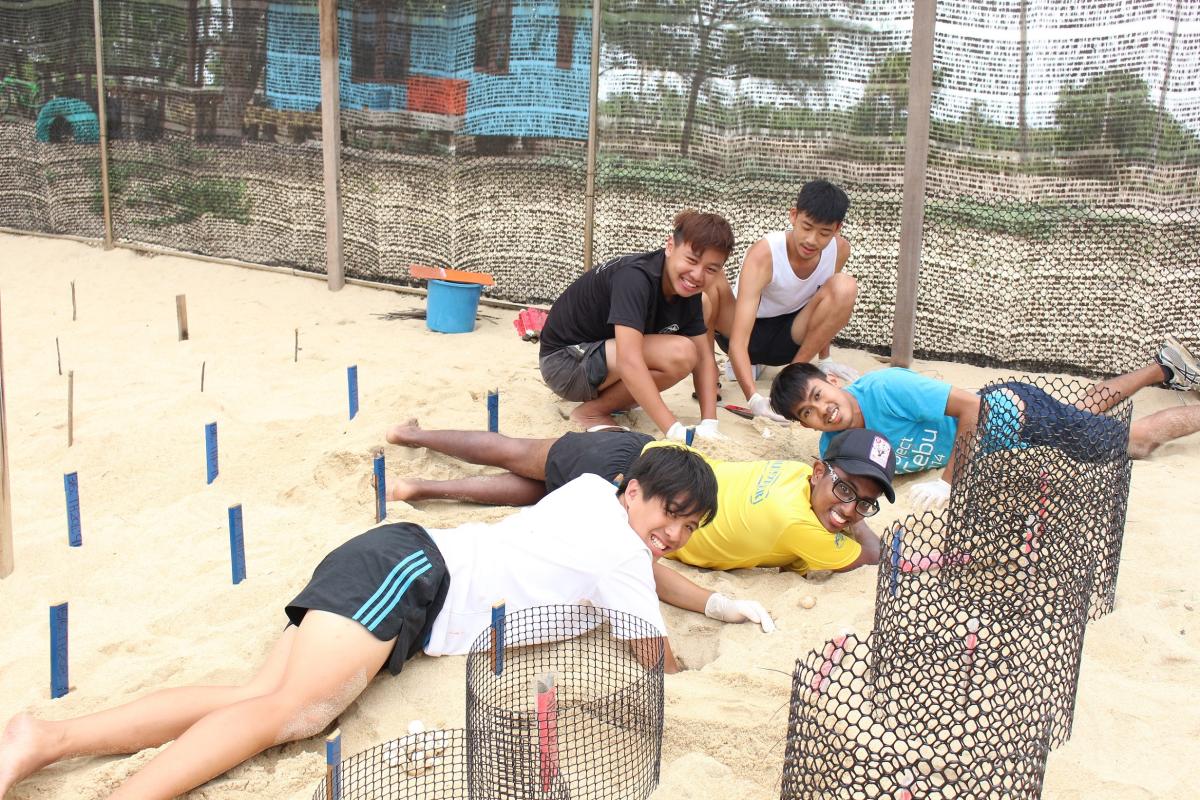
2) Assisting the WWF with their turtle conservation efforts. In the night, we patrolled beaches as “egg runners”. That is to say that we would help spot turtles coming to shore to lay eggs, and that we would help excavate the eggs and bring them back to WWF run hatcheries where the turtle hatchlings could be hatched without being disturbed by poachers or predators. On some days day, we helped excavate some of these nests when the hatchlings were due to hatch, and brought these little turtles for release into the sea at night. We also help mark some painted terrapin shells.
I can say with confidence that embarking on this project has been the ‘scoutiest’ thing I have ever done, because it really felt like an adventure travelling to this faraway rural place to try doing this stuff, such as I had never done before. I even learnt to cycle for this trip – I couldn’t previously but forced myself because it was a requirement to!
More specifically, we attained the desired outcomes in experiencing and attempting the UN MDGs ourselves. While we assisted the local community and the WWF with our labour, we also learnt many things on this trip.
1) Conservation theme
Seeing wild turtles in real life is a magical experience. This sounds exaggerated, but I don’t know how else to say it. Living in an urban environment can sometimes separate the individual from the wider world he/she lives in, and participating in this project allowed me to realize the larger connection and responsibility we have to the environment. While I understood a bit more about why turtles are important to ocean ecosystems (they eat jellyfish, which eat fish eggs, which means less seafood for humans) for human society, and that I should use less plastic, the general picture about how human activities impact the natural environment was the broader takeaway for me.
2) Making new friends, etc.
Being socially awkward, it was challenging and rewarding embarking on a 2 week trip with people I did not know very well at first. Scouting is ultimately about making new friends and maintaining harmious relations.
3) “Wind of gratitude”
This project made me consider what life is about, given different modes of living – urban vs. rural, what does it really mean to be satisfied/happy? Staring at the starry night sky and reconnecting with the environment can trigger quite a lot of reflection about the meaning of life.
4) Empowered ability to influence/reflect
Equally importantly, this highlights the ability of youth to make a difference in their own small way by dedicating some time of their life to service projects, and then talking about it to tell others what they did so that we can influence more people to do the same. If conservation is a shared responsibility, we have to get more people involved so that the net impact will be greater, and scouting is a good network in which we can get more people interested and involved in environmental work.
Share:
Subsequently, members of our team produced individual reports reflecting on our experiences in a comprehensive way, some of which I am summarizing and reproducing for this MOP report.
We also shared our experiences with our family, friends, and fellow scouts by sharing photographs and videos of our experiences via whatsapp chats, Facebook posts, and a blog we maintained during the trip. Back in Singapore, I mentioned this activity to scouts in younger age sections, encouraging them to try this out when they progressed to the Venture and Rover section of my scout group. Furthermore, our team conducted a post trip activity, where we helped clean a beach in Pulau Ubin, an island off the northern coast of Singapore on 8th October 2016. In conjunction with the National Parks Board of Singapore, we searched the beach and cleared discarded fishing line and fishhooks from the sandy shores, where they could be hazardous to local fauna. This activity demonstrated that we will continuing efforts at conservation even after the end of our original activity in Terengganu. We shared this activity on social media as well.
Finally, I am writing this scout.org post now so that scouts all over the world can read about this wonderful experience and be inspired to do their own messenger of peace project as well.


