
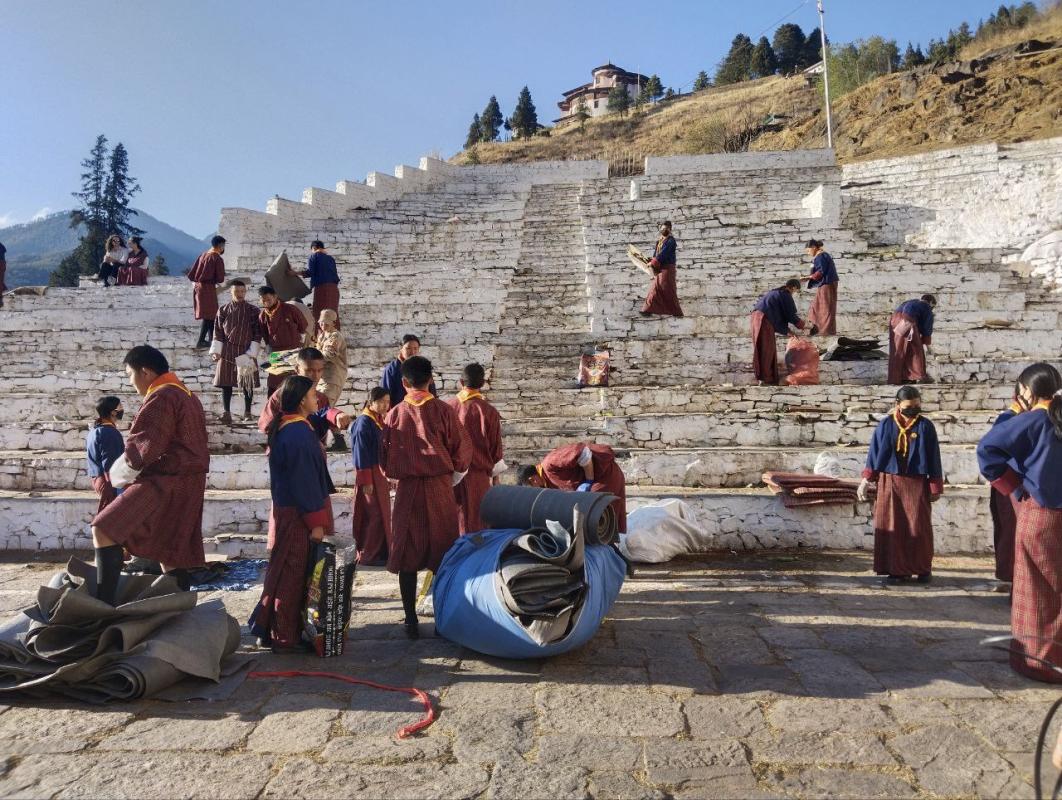

Waste Management at Paro Tsechu(Festival):International Attraction
Paro Tsechu, an international and domestic attraction for the people in Bhutan, made me and other volunteers to consider working towards management and environmental preservation.
From around 8 in the morning, me and the volunteers made it to the Dzong area in which the Tsechu was held. Till around 2 in the afternoon, we worked on managing pathways for the people, along with garbage disposal. Then from 3 pm to around 6 pm, we worked solely on waste disposal
The project had a positive impact on both the environment and the people attending the festival. It helped maintain cleanliness in the Dzong area during the Paro Tsechu, reducing litter and promoting proper waste disposal practices. Visitors became more aware of the importance of keeping public spaces clean, and many were encouraged to use designated disposal areas.
Additionally, the project improved crowd movement by managing pathways, making the event safer and more organized. It also inspired a sense of responsibility among volunteers and the community, showing that collective efforts can contribute to environmental preservation and sustainable event management.
Through this project at the Paro Tsechu, I learned the importance of teamwork, coordination, and proactive planning in managing large public events. It highlighted how essential public awareness is in maintaining cleanliness, as many people are willing to cooperate when guided properly. I also realized that waste management requires not just effort, but proper systems such as clear disposal points and continuous monitoring.
To improve the project, I would focus on better pre-event planning by increasing the number of waste bins, placing clear signages, and conducting awareness campaigns before and during the event. Engaging more volunteers and introducing waste segregation practices would also make the effort more effective and sustainable. Additionally, collaborating with local authorities for structured waste collection and disposal would enhance overall impact.


