
Scout Tackles Mental Health
The World Economic Forum estimates that over one billion people globally have a mental, neurodevelopment or substance use disorder.1 Despite being critical to overall wellbeing and physical health, diagnoses and furthermore, treatment or support, remain much lower than this estimate. This presents a global issue where mental health matters are overlooked, misdiagnosed and not dealt with. This statistic is particularly shocking in among young people throughout the globe and within South Africa. I challenged myself to work on this award to play my part in tackling one of the most pressing issues in my community. Among Pollution, Poverty and many more I identified one of the most crucial challenges faced by young people in the 21st Century: Mental Health.
Statistics from the South African Depression and Anxiety Group (SADAG)2 state that the age group between 10-29 is the highest risk group for suicide. 38,3% of teens felt so hopeless that they sought help or counselling 31,5% have attempted suicide and needed medical treatment. 9,5% of all non-natural teen deaths are due to suicide. Calls to action of young people on social media speaking out about their mental health issues and lack of knowledge on where to get help also played a part in me choosing this project. It was a touching thing to see the discussions starting yet one thing was missing. Most of the time information shared was either incorrect, misinforming or no one was prepared to take action to solve the problem except behind the comfort of their screens. As a Messenger of Peace, I took it upon myself to take action and change the narrative.
Project Link to the SDGs
The Sustainable Development Goals were adopted by the United Nations General Assembly on September 25, 2015. These goals are aimed at improving the living conditions of all people as well as the environment. This project is directly linked to goal 3 of the United Nations Goals for Sustainable Development, which advocates for good health and wellbeing. Access to basic health services is a fundamental human right. Mental health is especially important because it is often overlooked, leading to people having little knowledge or awareness about their own mental health. Left unattended, poor mental health can have undesired consequences such as stress, depression and in serious cases, can lead to suicide. In rural communities, this is prevalent and it is the major motivation for my project. I believe that if more young people are aware of their mental health, the statistics on mental illnesses can significantly drop. My project also swings very much into goal 17 ‘Partnership for the goals’ as I partnered with various stakeholders throughout the project.
AIM: To provide a safe space for youth to talk about mental health issues that they faced with, tackle mental health stigmas in their communities and learn about how to manage their mental health. This connected to SDG 3: Good Health and wellbeing because it focused on the mental health of young people. It had been a long journey to this point. And it certainly had not been comfortable. Throughout the whole project, I have learned to confront my own stereotypes about mental health and those of my community. Things did not always go according to plan. This helped me sharpen my planning skills. I have learned the hard way about the importance of having a plan B.
SUCCESSES I had one goal throughout the whole project:
To promote mental health dialogue by equipping young people with knowledge on:
1. General mental health
2. Dismantling mental health stigmas
3. Coping with life experiences
4. Mental health disorders.
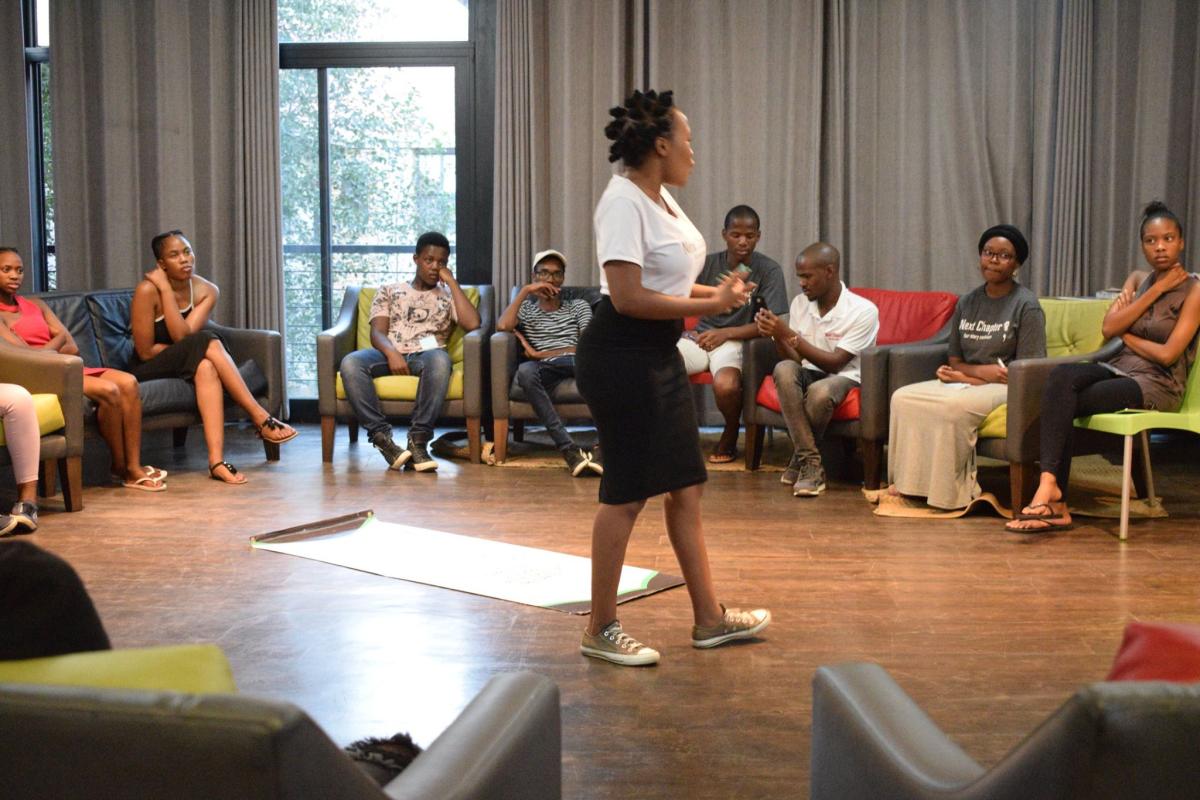
I dedicated a total of 107+ hours addressing mental health issues in the Mpumalanga region and the University of the Free State Bloemfontein Campus. I never could have predicted the impact of this project when I took it up. Yet when presented with this opportunity to reflect I am proud I had the courage and strength to see it through to the end. I have learned more than I thought I knew. My own stereotypes and stigmas on mental health have been dispelled. I have started to go to counseling to deal with things that bother me. Moreover, this project has touched over 500 young people at the University of the Free State. I have also grown as a leader during this time. There were times when I was the organizer of big events and sessions where I would not even get the platform to speak because there were other matters and logistics to resolve. One such event was the Mental Health Day5 which was our biggest event all year and saw the attendance of over 200 students. I have learned also, the power of team work and persistence. An important part of this reflection is also stating how I plan to keep this project sustainable over a period of time. As mental health awareness has proven an important and vital part of our lives as students, I will continue to pay it forward by volunteering with Next Chapter for the next two years. I will also pursue mental health awareness within the Kovsies Rover Crew and negotiate a possible partnership between the Campus Rover Crew and Next Chapter on mental health matters.
Gallery


