
Mental Health Awareness
An Adventure on Mental Health
From September 2018 until 26 January 2019, I challenged myself to undertake the Scout of the World Award. It has been a journey of self-discovery and learning. The Scout of the World Award is a recognition award that encourages young Scouts and Rovers like myself to play their part in creating a better world by tackling challenges in their community that resonate to them. I challenged myself to work on this award to play my part in solving some of the most pressing issues in my community. Among Pollution, Poverty and many more I identified one of the most crucial challenges faced by young people in the 21st Century: Mental Health.
I was inspired by these statistics from The South African Depression and Anxiety Group (SADAG)
The age group of between 10-19 is the highest risk group for suicide.
38,3% of teens felt so hopeless that they sought help or counselling
31,5% have attempted suicide and needed medical treatment.
9,5% of all non-natural teen deaths are due to suicide.
I was also inspired by the calls to action of young people on social media speaking out about their mental health issues and dilemmas. It was a touching thing to see, yet one thing was missing. No one was willing to do anything to actually tackle the problem except post about it and retweet the links behind their screens and the safety of their homes. As a Messenger of Peace, I took it upon myself to take action and change the narrative.
This project is directly linked to goal 3 of the United Nations Goals for Sustainable Development, which advocates for good health and wellbeing. Access to basic health services is a fundamental human right. Mental health is especially important because it is often overlooked, leading to people having little knowledge or awareness about their own mental health. Left unattended, poor mental health can have undesired consequences such as stress, depression and in serious cases, can lead to suicide. In rural communities, this is prevalent and it is the major motivation for my project. I believe that if more young people are aware of their mental health, the statistics on mental illnesses can significantly drop. As part of the 2018 Rover Centenary, the Scout of the World Award had an extra requirement, that Scouts and Rovers incorporate “100” into their service projects. I pledged 100 hours of service to tackle mental health in my district tackling Mental Health.
Taking Action
After exploring how mental health issues affect youth and researching the consequences of teenagers not having access to mental health education, I was clear on what needed to be done. This action plan was created to increase awareness of mental health, dispel mental health stereotypes and contribute to the development of young people by providing access to information on mental health.
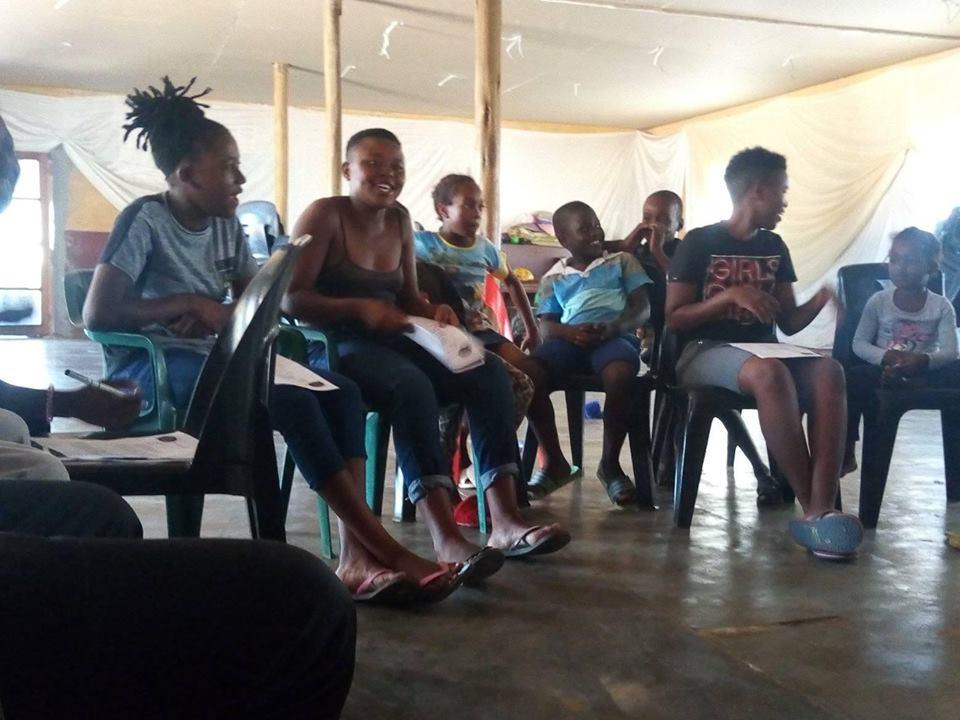
But first, I needed a roadmap, so I brought together a team of young people, youth activists, and Scouters who were willing to be part of the project. I am excited to have finally finished this project. It has been eye-opening. I am confident that it made a massive impact considering the evaluations received from participants. During the entire project, including the Discovery + Service project I spent a total of 122 hours and interacted with a total of 62 young people. Although I did not meet my 100 youth target, I was able to meet 100 hours. Another difficulty was the unavailability of the leaders who had initially volunteered. Out of 8 volunteers, only 3 were available to assist me to run the project.
This was a very challenging turnout as I had to rethink the whole project plan in just a few days and figure out a way forward. It definitely did challenge our execution skills. With just three team members we had to cram multiple tasks into our own which were already strenuous. Both venues where we run the sessions were not the environment we’d anticipated when we planned the program so we also had to make changes to suit each environment and make sure each task still has an educational aspect. I must admit at some point I did consider quitting everything as things really did not look promising. But I had never quit anything in my life and I was not gonna start then. That is how the project was pulled off. With a bit of pride, a hundred and eighty rands, an awesome team of four and a lot of amazing participants.
Considering the circumstances surrounding all our planning, it is positive to say that it was FANTASTIC. Feedback from our participants proves that they all had a wonderful time during the course of the project. The surveys we conducted confirmed the shocking statistics that our youth are battling with mental health issues, mostly due to stereotypes in the community and from their own experiences that they are battling with. I am delighted that most of our participants celebrated their awareness on mental health and pledged to take action to speak what they learned and to be active citizens in the fight against mental health illnesses among all people.
From the moment that I conceived the project, I realized that partnering with other youth organizations in the community was going to make the project sustainable. This included organizations such as Childline, Lovelife and the National Youth Development Agency. But Childline was dissolved and Lovelife was bankrupt. The NYDA, on the other hand, wanted money for community service.
This was the first challenge. I overcame this by reaching out to other Scouters instead.
The second challenge was the cancellation of our district closing camp. Poor planning for the camp made it impossible to host it. Without the camp, I had no platform for my camp. I overcame this challenge by making my project mobile and doing it at two separate venues, Imagine Scholar in Kamhlushwa and Alliance Church In Numbi.
The third challenge was lack of funding. I was unable to get sponsors for the event. As a result, I had to self-sponsor. And I had only an R180 rands for everything, including printing out attendance registers, surveys as well as transport to both venues and refreshments.
The fourth challenge was that team members pulling out of participating in the project. This really put me under a lot of pressure because it meant taking up more tasks. The rest of us were swamped already… I overcame this challenge by reaching out to Peggy and Phillip who initially were not team members. The experience was enlightening, motivational and EPIC. I finally got to learn hands-on what it means to be a global citizen. According to my experience, it is to take measures to make a positive change in one’s immediate community to make the lives of others better through service. I learned that being a global citizen is not only about helping others but yourself as well through self-awareness and introspection so that you become a good member of society.
Some major skills I learned include proper planning. Being able to plan for every possible outcome, and put measures in place for the worst that could happen. To work well in a team and be able to delegate. I got to delegate some of the important tasks because I could not do everything at once or be everywhere at the same time. This was an eye-opener as things did not always go exactly as I planned. It also made me respect my team members’ views on how we should execute activities. Also, I learned that in future I need to ensure that there’s money for the project before execution starts.
To make my project sustainable I commit myself to partner with the Mpumalanga Region to always run mental health sessions at each annual summer camp for the next triennium. The summer camp as the region’s biggest event and attracts more than 200 Scouts each year. On the 18th of January 2019, I presented my project to the Mpumalanga Regional Management which took place on the same day. This was in the presence of the regional commissioner, the deputy regional commissioner and other members of the management team. I presented a powerpoint presentation (attached) and also shared a slideshow with graphics from the entire project from beginning to end.

