
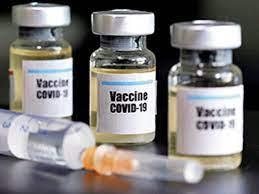

VACCINATION :MYTHS AND FACTS
On 22 , may2021, Bharat and Scout guide oragnisation(BSG) conducted a webinar and live stream on youtube titled "VACCINATION :MYTHS AND FACTS " (YOUTUBE LINK: https;//youtu.be/iyYc2_TGolk) . It gave the information about vaccination drive going on in india . some the information is given below :-
* Need of vaccine: Vaccines contain the same germs that cause disease. (For example, measles vaccine contains measles virus, and Hib vaccine contains Hib bacteria.) But they have been either killed or weakened to the point that they don’t make you sick. Some vaccines contain only a part of the disease germ. A vaccine stimulates your immune system to produce antibodies, exactly like it would if you were exposed to the disease. After getting vaccinated, you develop immunity to that disease, without having to get the disease first. This is what makes vaccines such powerful medicine. Unlike most medicines, which treat or cure diseases, vaccines prevent them.
* who can get vaccine of covid 19 :Based on the potential availability of vaccines the Government of India has selected the priority groups who will be vaccinated on priority as they are at higher risk. The first group includes healthcare and frontline workers. The second group to receive COVID-19 vaccine was the persons over 60 years of age and persons between 45 and 59 years of age with comorbid conditions. From April 1st, 2021, People above the age of 45 years (born before 1st Jan, 1977) are eligible to get the COVID-19 vaccine. From May 1, 2021, all eligible citizens above the age of 18 years can get the COVID-19 vaccine.
*efficiency of vaccine in india (covid 19) : To ensure that a vaccine is safe, we need to try it on a large number of people. The vaccine developers have not reduced the sample size at any stage of clinical trials rather it was bigger than what we usually test a vaccine on.When a vaccine is tested, most of the adverse events or unwanted effects, if any, occur in the first four to six weeks of its administration. So, in order to ensure that it is safe, we keep a close watch, for the first two-three months, on the people it has been given to. This data help us decide if a vaccine is safe. All concerned in the line of vaccine development, testing and evaluation have followed these procedures to the T. Both Indian vaccines are considered safe on this yardstick.As for the efficacy of the vaccine, we need time to tell how effective a vaccine is. All the global agencies have set the benchmark that only those vaccine candidates which show an efficacy of at least 50-60% will be considered. Most of the vaccines have shown an efficacy of 70-90% within the short period of two to three months of observation. Besides when a vaccine is given an emergency use authorizations/permission for restricted use, as in the case of the COVID-19 vaccine, the trial follow-up continues for one-two years to assess the total duration of protection the vaccine will provide.
* what to expect after vaccination :
Stay for monitoring. The health care provider should observe you for about 15 minutes after the vaccine is administered to make sure you don’t have any immediate reactions. However, it is extremely rare for severe health reactions.
Be prepared for some side effects. Vaccines are designed to give you immunity without the dangers of getting the disease. While it’s normal to build immunity without side effects, it’s also common to experience some mild-to-moderate side effects that go away within a few days on their own.
Some of the mild-to-moderate side effects you may experience after vaccination include:
:- Arm soreness at the injection site ,Mild fever ,Fatigue,Muscle or joint aches ,Chill ,Diarrhoea
If any symptoms continue for more than a few days or if you experience a more severe reaction, then contact your health care provider immediately. Be patient. Building immunity takes time. You will be considered fully vaccinated two weeks after your second dose of the Pfizer-BioNtech or Moderna COVID-19 vaccine, 15 days after your second dose of the AstraZeneca vaccine or two weeks after the single-dose J&J/Janssen COVID-19 vaccine. Keep yourself and others safe. While these vaccines are showing to be highly effective at protecting people against serious illness from COVID-19, we’re still learning about whetherit is possible for a vaccinated person to still spread the virus, even without symptoms. Therefore, it is important to continue practicing safety precautions to protect yourself and others, including avoiding crowded spaces, physical distancing, hand washing and wearing a mask .
Guidelines of vaccination :
* Covid patient should get vaccination 1/2nd dose after 3 monts of his/her recovery .
* 2nd dose of vaccine should be afte 5-6 weeks for covaxin and after 12 to 11 weeks for covishield (research going on i.e. guidelines may be revised)
* blood to be donated after 60 to 65 day of vaccination .
saty at home and stay safe .for more infomation visit government webiste :https://www.mohfw.gov.in/covid_vaccination/vaccination.
source : https://www.mohfw.gov.in/covid_vaccination/vaccination.
last updated on 23rd may 2021


