

Regent Honey-Eaters Weekend 2016
The Regent Honey-Eaters Weekend
The regent honey eater is a critically endangered species of bird that once bred in wooded areas of Eastern Australia. Once upon a time these species of birds were seen in flocks of hundreds. Today it has been recorded that they are no longer found in South Australia and in Queensland they are an extremely rare sighting. The remaining population of the Regent Honey Eater species live in the threatened box-ironbark forests of Victoria and New South Wales.
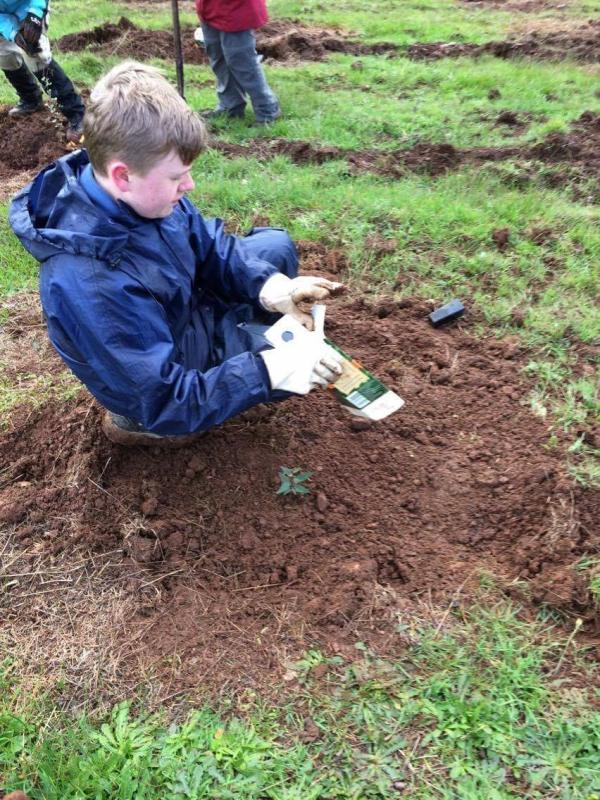
On the Saturday of the amazing weekend we spent many hours planting roughly 2100 trees that in 4 years will begin to create a new habitat for the Regent Honey Eater species to live and breed in once again. In the space of approximately 6 hours, 60 Venturers including myself covered the area with a variety of plants that the birds can make nests, collect nectar and fly around for years to come. On The Sunday after an extremely restless sleep, we all got up to engage in multiple activities where we tested our knowledge on the environment and had a discussion in small groups about the Australia Scout Environment Charter which was a requirement for the badge. These activities included a Monopoly game about environmental hazards such as waste materials and toxins, a discussion about our carbon footprint with a sheet we got to make with it and an experiment to teach us about erosion and landslides.
The reason for this event taking place was to protect the Regent Honey Eater species from extinction and to help them regain a normal population in Victoria once again. I personally didn’t know a lot about this species of bird and why we were doing this in the first place but throughout the weekend I learnt so much about caring for the natural flora and fauna across Australia, not just as a Venturer but as a human who does have the ability to help the environment. Even by taking small courses of action. I didn’t just learn about the environment though, I also learnt how to plant trees, use a shovel and take care of weeds.
Before planting 2100 native indigenous plants throughout the habitat at Lurg we were given a very detailed briefing on how to use all of the planting equipment and the importance of correct planting which I learnt quite a lot from. I was taught how to properly take a plant out of its pot so that I wouldn’t destroy the roots that is vital to its survival and also how to pull out weed roots so that the plant would not become dehydrated from the weeds using up majority of the water. All in all I’m very happy with the condition of the plants I laid down and how I left them so that they will grow.
As I’ve stated above I have already learnt so many things from this weekend but some things I can bring in from the five areas in my record book is that;
• We created a sufficient natural habitat to exist and support the Regent Honey Eaters so they can start repopulating safely in the Lurg Area.
• I have learnt how to minimise the risk of harmful substances to people and the environment by finding safe places to dispose of waste materials and harmful substances.
• Through the experiment in erosion and natural disasters I have learnt how to minimise the devastation by planting trees to hold the dirt together in the result of a landslide and how to create houses that will still keep structure in floods and earthquakes.
To finally sum up I really do think that our work has improved the lives of these birds and other species in that area. This habitat will make sure that in the next generation our children and grandchildren can hopefully see them flying in flocks once again. I hope that these plants will survive so that eventually I might be able to see the work we have all done.
Gallery


