
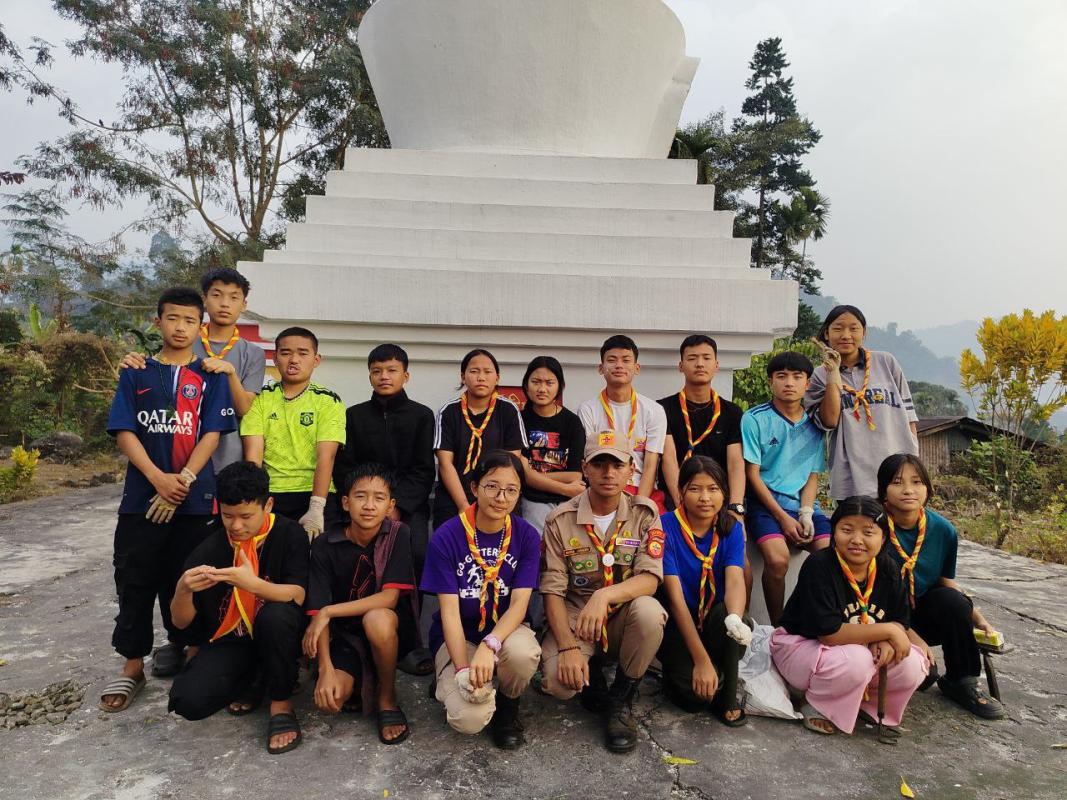

Scouts in Service: Protecting Our Chorten and Environment
This project was inspired by my growing understanding of the importance of protecting the environment and respecting our cultural heritage. Chortens are important cultural and spiritual sites in our communities, and keeping their surroundings clean and well maintained is a meaningful way of showing respect for our culture. As Scouts, we believe that service to the community is an important responsibility, and this activity gave us an opportunity to contribute through practical work. I was motivated to take part because I wanted to learn more about caring for nature while also helping preserve an important cultural place for present and future generations.
The project was carried out around a local Chorten, where a total of 28 Scouts participated actively in the volunteer activity. We began our work at 9:00 a.m. and continued until 2:00 p.m., working together to improve and maintain the surroundings of the Chorten. Our main tasks included uprooting and cutting unwanted grass and clearing overgrown vegetation from the area. After cleaning the surroundings, we also planted several plants to improve the environment and appearance of the site. All 28 Scouts worked tirelessly as a team, sharing responsibilities and supporting one another throughout the activity. Through this hands-on service, we were able to contribute to both environmental care and the preservation of an important cultural space.
The project had a positive impact on both the environment and the cultural site by making the surroundings of the Chorten cleaner, more attractive, and better maintained. Removing unwanted grass and vegetation improved the condition of the area, while planting new plants contributed to creating a greener and more pleasant environment. The participation of 28 Scouts also strengthened the spirit of volunteerism, teamwork, and community service among young people. Most importantly, the activity helped the Scouts understand that protecting our cultural heritage and caring for nature are closely connected responsibilities. By taking practical action, we demonstrated that young people can play an important role in preserving cultural places and creating a cleaner and greener community for future generations.
Through this project, I learned that in the 21st century, preserving and promoting our culture requires active participation and service from everyone, especially young people. I understood that cultural preservation is not limited to protecting monuments and traditions but also includes taking care of the surroundings and environment associated with them. The activity taught us the value of teamwork, discipline, responsibility, and dedication while working together for a common purpose. In the future, we could make the project better by organizing regular maintenance activities, planting more suitable native plants, creating awareness among young people about the importance of cultural sites, and involving local communities in protecting and maintaining these places.


