

Are your shoes tight?
Are your shoes tight?
Do you know in which conditions your shoes are made? A recent survey revealed we don’t know much about it, but 85% people would agree to pay more for shoes produced in a more ethical way. Even if you don’t belong to them, you have an opportunity to make the shoe industry better.
24.4 billion shoes in a year
The thing is we know only little about how and where our shoes – ballerinas, hiking boots, trainers –are made. In 2004, 24.4 pairs of shoes were produced all over the world, which means three pairs per person. But who made them? Where do they come from? And doesn’t the material contain harmful substances?
I got used to taking care of the origin of my clothes, being influenced by news like the one about a tragedy in Bangladesh where a complex Rana Plaza collapsed and 1138 people sewing clothes died. However, it wasn’t until now when I started to learn about many problems of shoe-making.
I have two pairs of favourite ballerinas. Black one with a bow, and grey one, comfortable and fit to my feet. I like both the pairs but lately I only wear just one pair with a good feeling I know what I wear. The other pair arouses questions I can’t answer.
Child labor is not an exception
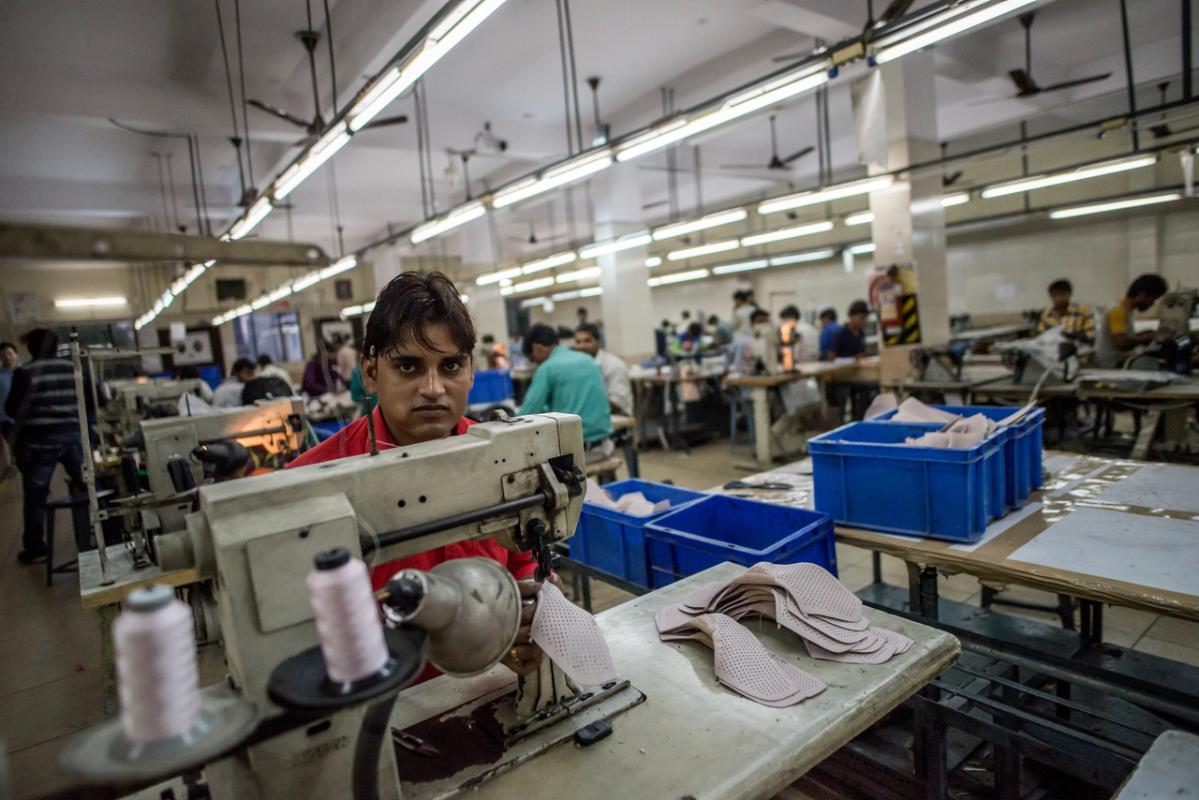
Low wages that are hard to live on are the main problem. It leads to an illegal amount of overtime. A great part of shoe-making is done right in the homes. Especially women make them, without any benefits for employees and for a low wage paid by piece. Child labour is no exception. The conditions themselves are dangerous and harmful for health. For instance, chemicals used to tan skins are toxic and can cause cancer, asthma or dermatological problems. Chromium, which is used to process 80-90% of skin, is in particular questionable.
I do not like it, but even I can help to change it. I can give preference to those shoes that are made in better conditions. I did so with my grey ballerinas. They are from Ethiopia, from a fair trade workshop. Their sole is made from recycled tyres, which would otherwise end up at a rubbish dump, and are sewn from local fabric, most often bio-cotton grown at small farms. Contrary to other shoes of mine I know their story and I know in which conditions they were made. Although I do not know everything I would like to, it is a good start. Next time I may have my shoes made at the local shoemaker.
And how is it with you? Do you know the story of your shoes? Let’s try to pay attention to the conditions our shoes are produce in, let’s ask in shops about the ethical possibilities. Let’s require from the companies to tell us how the shoes are made and let’s ask for guarantee that nor humans nor the nature suffered any harm during the production.

